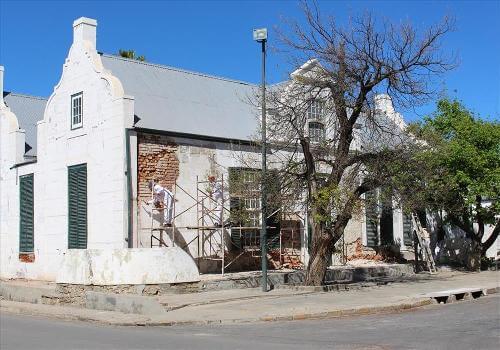
WHAT ARE THOSE POWDERY WHITE AREAS ON MY BRICK WALLS?

Efflorescence is an eyesore! This is the presence of the white powder that forms on the face or surface of concrete, plasterwork and brickwork indicating moisture in the wall. Blooming or flowering are other names for efflorescence.
It is a cause for concern!
Efflorescence is a build-up of minerals and salts staining the surface of the concrete, brick and plasterwork due to repeated bouts of excess water in the material. The minerals and salts that naturally occur in the material are dissolved when the brickwork, plasterwork or concrete is waterlogged indicating moisture in the wall.
Concrete, pavers, brickwork and plasterwork are porous and can absorb or wick water and draw salts to it like a tree transports water from its roots to its leaves. This is capillary action. When efflorescence or blooming happens, it can indicate a moisture issue that could potentially damage the structure.
When water reaches a building material’s surface, evaporation will occur. Water absorption and wicking will continue after the water evaporates and the salt is left behind looking like flowering or blooming. This eventually creates a high salt concentration, leading to osmosis.
What is Osmosis
Simply put, osmosis in building materials is the movement of water from a region of low salt concentration to a region of high salt concentration in the material.
During osmosis, water moves toward salts and minerals to reduce its concentration. It can cause large hydrostatic pressures within the porous building material. As a result, these pressures can damage or destroy the material.
Osmosis can cause pressure that ranges up to 200 bar, exceeding the structural strength of concrete or brickwork. As a result, osmosis may result in porous building material staining, cracking, flaking or falling apart.
Continue reading “Efflorescence”